
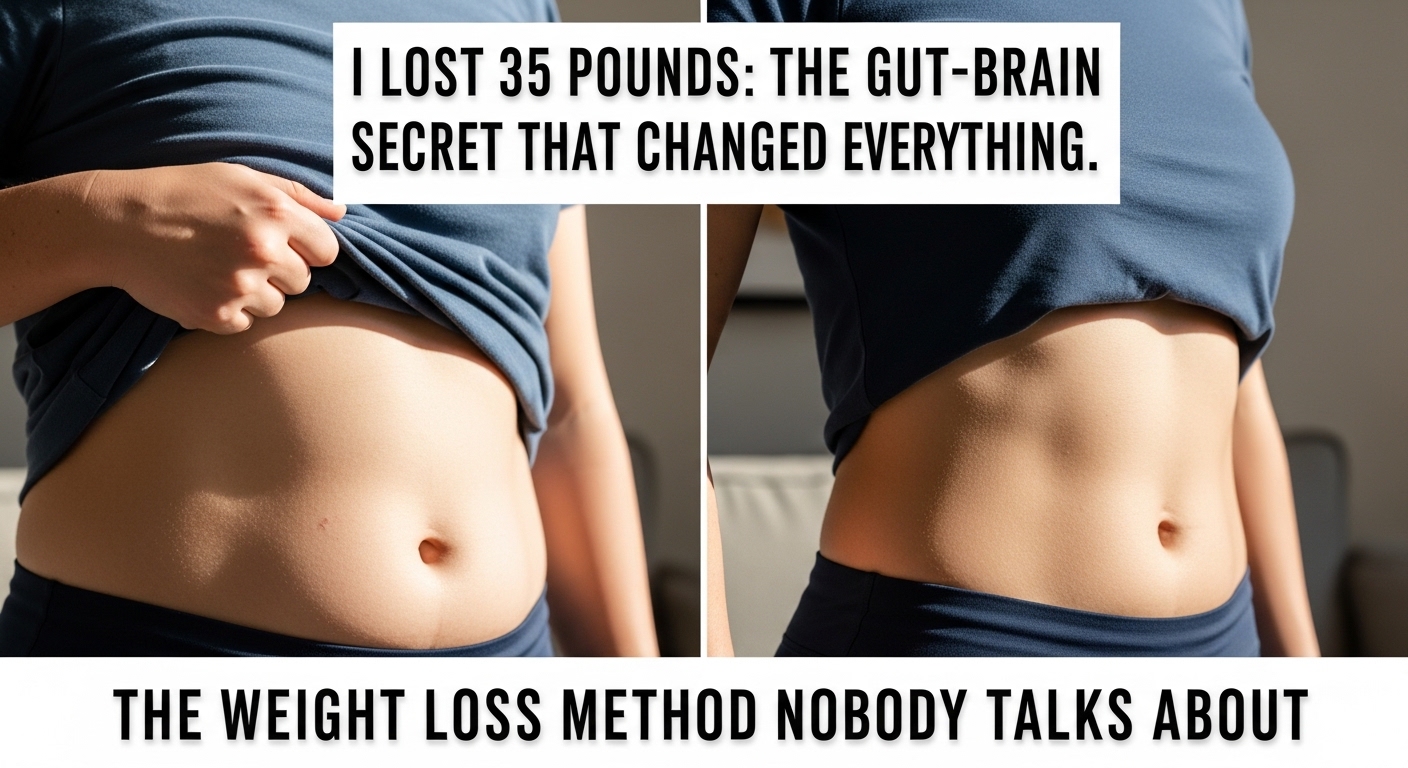
The Weight Loss Method Nobody Talks About
I was struggling with my weight loss. First, I try to figure out what is the reason and make a check list and build some habits. Though it was the big reason that I was a new parent and I could not sleep very well.
For years, I obsessed over every calorie. MyFitnessPal was my constant companion. I weighed food on a digital scale. I turned down dinner invitations because I couldn’t track the meal accurately.
And you know what? I stayed stuck at the same weight.
Then something shifted. I stopped counting calories and lost 35 pounds in eight months. No tracking. No measuring. No guilt spirals over eating an extra banana.
The secret? I fixed my gut. And that changed my brain. And that changed everything.
This isn’t another diet article. This is about why your gut microbiome might be hijacking your hunger signals and keeping you trapped in a cycle of cravings, restriction, and weight regain.
Who This Is For (And Who It’s Not For
This approach works if you’re tired of: – Logging every bite in an app – Fighting constant cravings – Losing weight only to gain it back – Feeling controlled by food
This might not work if you: – Need structured tracking for medical reasons – Have an eating disorder (please work with a professional) – Want rapid results in two weeks – Prefer strict meal plans
Be realistic. This took me eight months. Your timeline might be different. But the weight I lost stayed off because I changed the root cause, not just the symptoms.
What You’ll Actually Learn
By the end of this article, you’ll understand: – Why counting calories failed you (it’s not your fault) – How gut bacteria control your cravings – The gut-brain connection that regulates hunger – Five practical methods to reset your microbiome – A 30-day blueprint to stop tracking and start healing – What progress actually looks like when you’re not weighing food
You won’t get magic pills or overnight transformations. You’ll get real strategies that work with your biology, not against it.
Quick Wins: What You Can Do Today
Add one fermented food to your meals (sauerkraut, kimchi, yogurt)
Stop opening your calorie tracking app (yes, really)
Eat when genuinely hungry, not when the clock says to
Notice if you’re craving specific foods or just eating out of habit
Drink water before assuming you’re hungry
Take three deep breaths before meals to activate your vagus nerve
Choose fiber-rich foods that feed good gut bacteria
These small shifts signal to your body that you’re ready for a different approach.
Understanding the Core Concept: Your Gut Runs Your Appetite
Here’s what most diet advice gets wrong. They treat willpower like a muscle you can strengthen. They say you just need more discipline.
But your gut microbiome produces neurotransmitters that directly affect your brain. About 90% of your serotonin (the “feel good” chemical) comes from your gut, not your brain.
When your gut bacteria are imbalanced, they send signals that make you crave sugar, processed foods, and quick energy. These aren’t character flaws. These are biological signals from microbes that thrive on those foods.
The gut-brain axis is a two-way communication highway. Your gut sends signals through the vagus nerve to your brain. Your brain responds by creating hunger, cravings, or satisfaction.
When you count calories but ignore gut health, you’re fighting your biology with math. That’s why it feels so hard. Because it is.
How Gut Health Controls Weight Without Tracking
Your gut bacteria affect: – How many calories you extract from food – Which foods you crave – How quickly you feel full – How well you metabolize fats – Your insulin sensitivity – Inflammation levels throughout your body
Some people can eat more calories and stay lean because their gut bacteria are efficient at signaling satiety. Others extract more calories from the same food and struggle with constant hunger.
This isn’t fair. But it explains why two people eating identical meals can have completely different results.
The good news? You can change your gut bacteria. It takes time, but it’s possible.
Five Proven Methods That Worked for Me
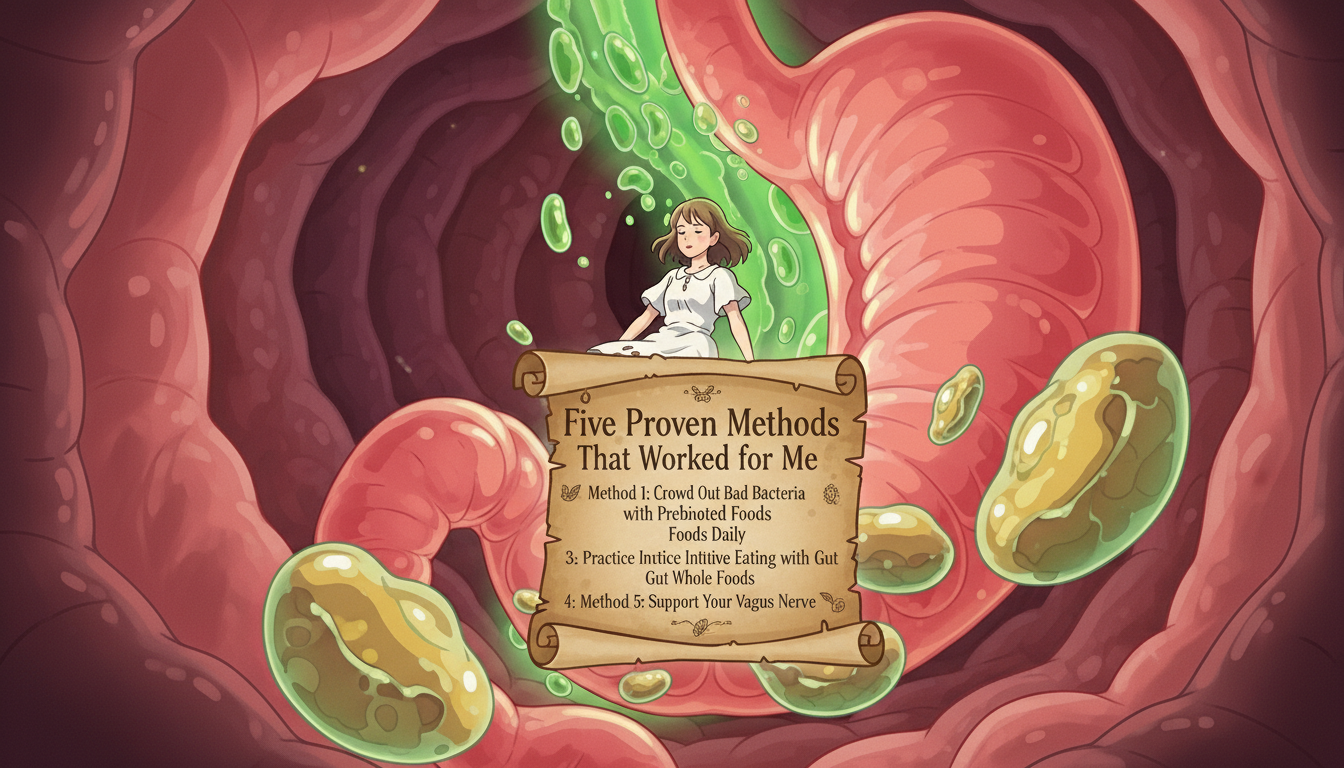
Method 1: Crowd Out Bad Bacteria with Prebiotics
Prebiotics are plant fibers that feed beneficial gut bacteria. When you eat foods like garlic, onions, asparagus, bananas, and oats, you’re literally feeding the microbes that help regulate your appetite.
I started adding raw garlic to salad dressings and eating a small banana with breakfast. Within three weeks, my sugar cravings dropped dramatically.
When to use this: Start here. It’s gentle and builds a foundation for everything else.
When not to use this: If you have SIBO (small intestinal bacterial overgrowth), some prebiotics can cause bloating. Work with a doctor first.
Method 2: Add Fermented Foods Daily
Fermented foods contain live beneficial bacteria. Think sauerkraut, kimchi, kefir, plain yogurt, miso, and kombucha.
I ate two forkfuls of sauerkraut with lunch every day. That’s it. No huge servings. Just consistent exposure to diverse bacteria.
The variety matters more than the quantity. Different fermented foods contain different bacterial strains.
When to use this: After you’ve added prebiotics. Give it at least two weeks.
When not to use this: If you’re histamine intolerant, fermented foods might cause reactions. Listen to your body.
Method 3: Practice Intuitive Eating with Gut Awareness
Intuitive eating means eating when hungry and stopping when satisfied. But here’s the twist: you need to distinguish between gut-driven cravings and genuine hunger.
Genuine hunger builds gradually. You feel it in your stomach. Any food sounds good.
Gut-bacteria-driven cravings hit suddenly. They demand specific foods (usually sugar or processed carbs). They feel urgent and intense.
I kept a simple journal: “Am I stomach-hungry or head-hungry?” Just asking the question helped me notice patterns.
When to use this: Once your gut is healing (usually after 3-4 weeks of prebiotics and probiotics).
When not to use this: If you have a history of disordered eating, work with a therapist who specializes in intuitive eating.
Method 4: Reduce Inflammation with Whole Foods
Inflammation disrupts the signals between your gut and brain. Processed foods, excess sugar, and industrial seed oils all trigger inflammation.
I didn’t eliminate anything overnight. I slowly shifted to eating more whole foods: vegetables, fruits, quality proteins, healthy fats, and whole grains.
The 80/20 rule helped. If 80% of my meals came from whole foods, the other 20% didn’t matter.
When to use this: Throughout the entire process. This is foundational.
When not to use this: Never. There’s no downside to eating less processed food.
Method 5: Support Your Vagus Nerve
The vagus nerve carries signals from your gut to your brain. When it’s functioning well, you get clearer hunger and fullness cues.
Simple ways to support it: – Deep breathing before meals – Cold water on your face – Humming or singing – Gentle yoga – Spending time in nature
I started taking three deep breaths before eating. It seems small, but it helped me slow down and actually taste my food.
When to use this: Daily. Make it a habit.
When not to use this: This is safe for everyone.
The 30-Day Blueprint to Stop Counting Calories
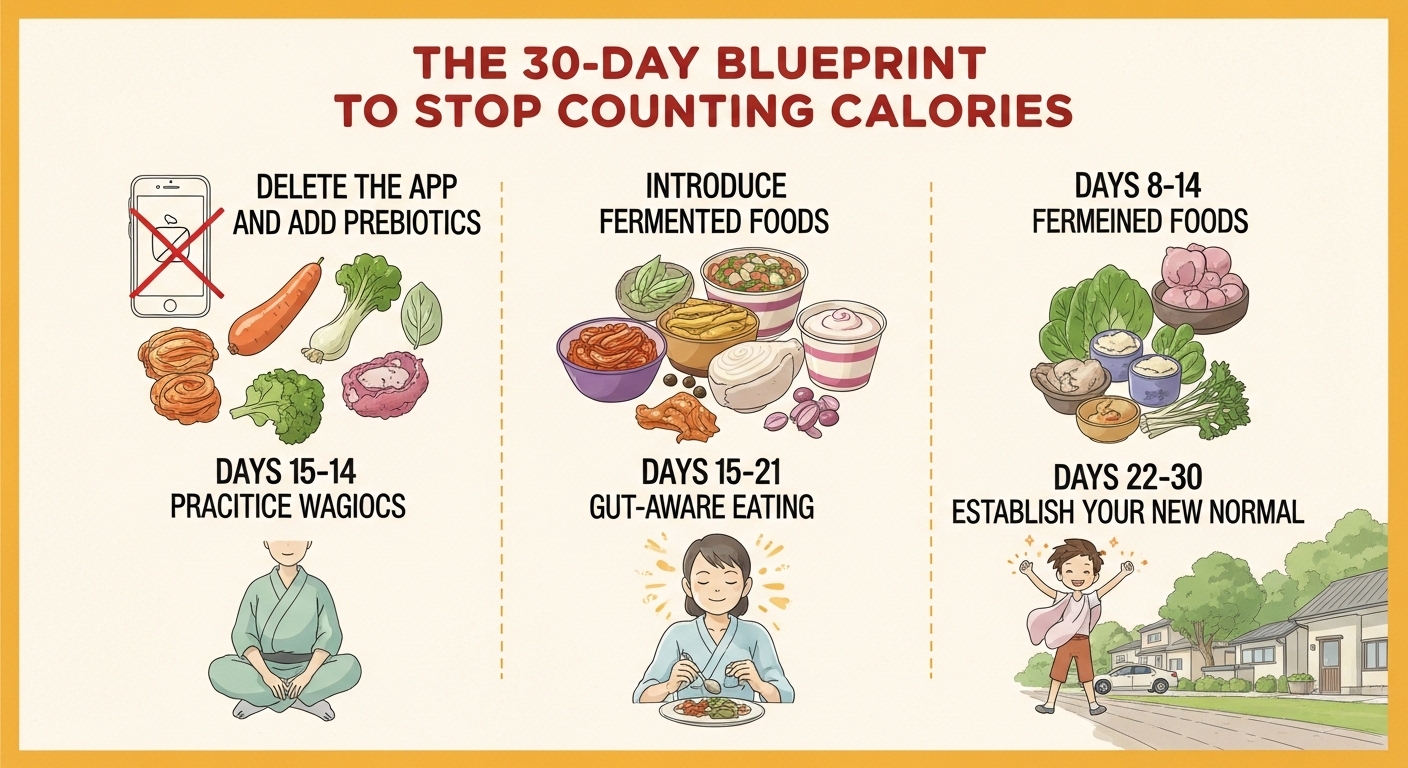
Days 1-7: Delete the App and Add Prebiotics
Delete your calorie tracking app. Yes, this will feel scary. Do it anyway.
Add one prebiotic food to each meal. Raw garlic in dressing. A banana at breakfast. Asparagus with dinner. Oatmeal as a snack.
Notice cravings without acting on them immediately. Just observe. “I’m craving chocolate right now.” Then wait 10 minutes. Often the craving passes.
Days 8-14: Introduce Fermented Foods
Add a small serving of fermented food daily. Two forkfuls of sauerkraut. A cup of plain yogurt. A few sips of kombucha.
Start noticing hunger versus habit. Are you eating because it’s noon or because your stomach actually feels hungry?
Keep a simple one-line journal: “Ate when hungry: yes or no.”
Days 15-21: Practice Gut-Aware Eating
Before each meal, check in: – Am I stomach-hungry? – What does my body actually want? – Am I stressed, bored, or genuinely hungry?
Eat slowly. Put your fork down between bites. Notice when you feel satisfied (not stuffed).
This week is about building awareness, not perfection.
Days 22-30: Establish Your New Normal
By now, your gut bacteria are shifting. You might notice: – Fewer intense cravings – More stable energy – Better digestion – Clearer hunger signals
Keep doing what worked. Add variety to your fermented foods. Try new prebiotic-rich vegetables.
Trust your body. If you’re genuinely hungry, eat. If you’re satisfied, stop.
The scale might not change much yet. That’s normal. Gut healing happens before weight loss shows up.
Metrics That Actually Matter
Forget the scale for the first month. Seriously.
Track these instead: – Cravings: Are they less frequent? Less intense? – Energy: Do you have more steady energy throughout the day? – Digestion: Are you more regular? Less bloated? – Sleep: Are you sleeping better? – Mood: Do you feel less anxious around food? – Hunger signals: Can you feel genuine hunger and fullness?
I took progress photos every two weeks. The visual changes came faster than the scale showed.
I measured my waist once a month. Inches matter more than pounds when you’re changing body composition.
What to Ignore
Don’t track: – Daily weight (it fluctuates from water, digestion, hormones) – Calories or macros (you’re done with that) – What other people are eating – Instagram fitness models (they’re not you) – Comparison timelines (your body has its own pace)
The number on the scale tells you almost nothing about gut health, inflammation, or metabolic healing.
Old Way vs. New Way: The Real Difference
Old Way: Calorie Counting
Focus on numbers
Ignore hunger signals
Fight cravings with willpower
Temporary results
Constant mental energy spent on food math
Weight rebounds when you stop tracking
New Way: Gut-Brain Reset
Focus on signals from your body
Honor hunger and fullness
Eliminate cravings by changing biology
Sustainable results
Mental freedom around food
Weight stays off because the root cause is fixed
The old way treats symptoms. The new way fixes the system.
Comparison: Different Gut-Health Approaches
Probiotic Supplements vs. Fermented Foods
Supplements give you specific strains in high doses. They’re convenient. But they’re expensive and might not colonize your gut permanently.
Fermented foods provide diverse bacteria plus enzymes and nutrients. They’re cheaper. But they require consistent preparation or purchasing.
Best approach: Use both. Take a quality probiotic while you build your fermented food habit.
Strict Elimination Diet vs. Gradual Shift
Eliminating all inflammatory foods at once (sugar, gluten, dairy, alcohol) works fast. But it’s hard to maintain. And it can create an unhealthy relationship with food.
Gradually shifting toward whole foods feels slower. But it’s sustainable. And you learn to make choices that work for your life.
Best approach: Start gradual. If you’re not seeing changes after two months, consider a targeted elimination with professional guidance.
Fasting vs. Eating Intuitively
Intermittent fasting can reduce inflammation and improve gut diversity. But it can also trigger disordered eating patterns.
Eating intuitively honors your body’s signals. But if your gut bacteria are imbalanced, those signals might not be trustworthy yet.
Best approach: Fix your gut first with prebiotics and probiotics for 4-6 weeks. Then experiment with gentle time-restricted eating if it appeals to you.
Ten Mistakes I Made (So You Don’t Have To)
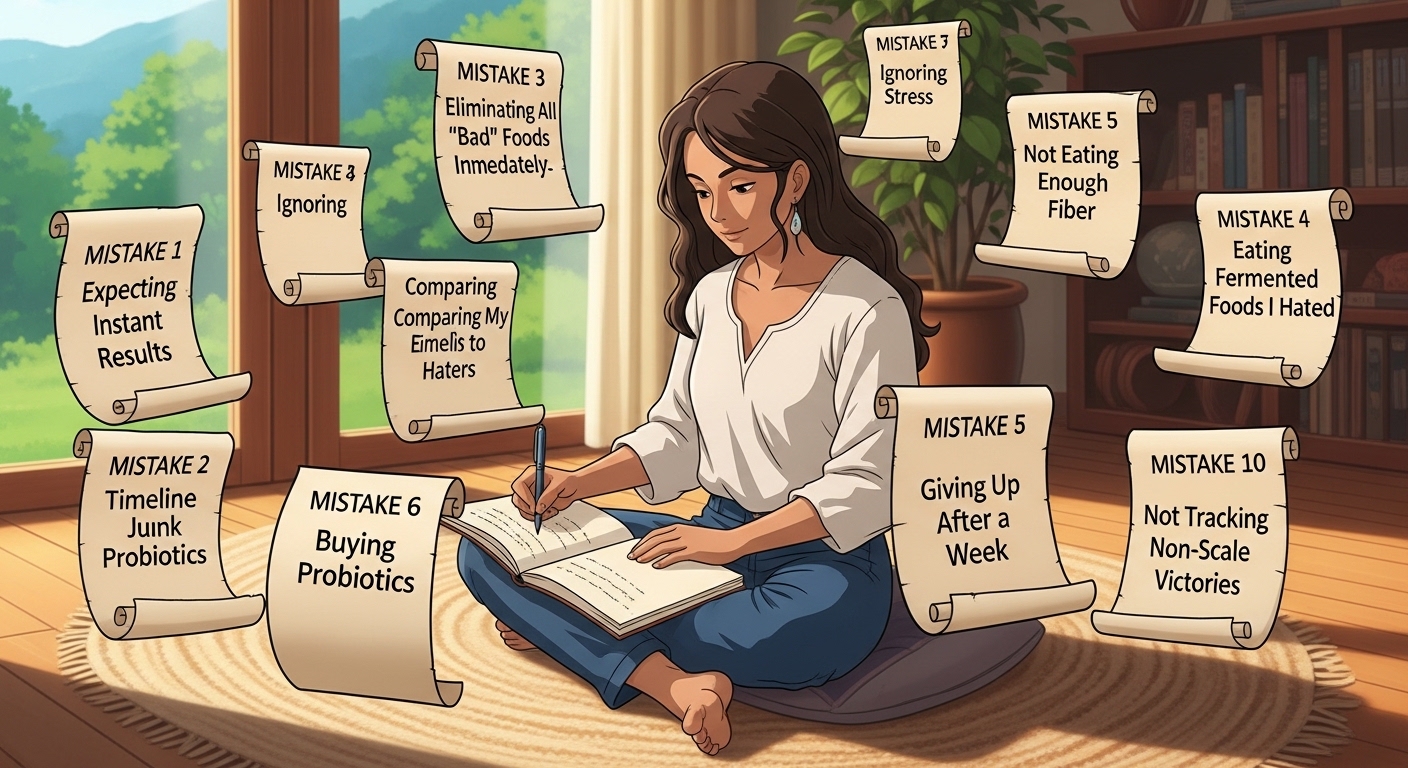
Mistake 1: Expecting Instant Results
I wanted to see changes in a week. When the scale didn’t move, I almost gave up.
The fix: Give it 30 days minimum before judging. Gut bacteria take time to shift.
Mistake 2: Eliminating All “Bad” Foods Immediately
I tried to quit sugar cold turkey. I lasted three days and then binged on cookies.
The fix: Crowd out, don’t eliminate. Add so many good foods that there’s less room for the processed stuff.
Mistake 3: Ignoring Stress
Chronic stress damages gut bacteria and disrupts hunger signals. I kept telling myself I’d relax later.
The fix: Prioritize stress management. Even five minutes of deep breathing daily helps.
Mistake 4: Not Eating Enough Fiber
I added probiotics but forgot prebiotics. The good bacteria had nothing to eat.
The fix: Aim for 25-30 grams of fiber daily from vegetables, fruits, whole grains, and legumes.
Mistake 5: Inconsistent Sleep
I stayed up late scrolling my phone. Poor sleep wrecks gut bacteria and increases hunger hormones.
The fix: Protect your sleep. Go to bed at the same time. Make your room dark and cool.
Mistake 6: Comparing My Timeline to Others
Someone online lost 40 pounds in three months without counting calories. I felt like a failure.
The fix: Your gut is unique. Your timeline is yours. Comparison steals joy.
Mistake 7: Buying Junk Probiotics
I grabbed the cheapest supplement at the drugstore. It didn’t survive stomach acid.
The fix: Look for probiotics with at least 10 billion CFUs, multiple strains, and an expiration date. Store them properly.
Mistake 8: Eating Fermented Foods I Hated
I forced myself to drink kombucha even though it made me gag.
The fix: Find fermented foods you actually enjoy. There are dozens of options.
Mistake 9: Giving Up After a Bad Week
I had a stressful week, ate pizza three nights in a row, and decided I’d ruined everything.
The fix: One week doesn’t undo progress. Just get back to your routine without drama.
Mistake 10: Not Tracking Non-Scale Victories
I obsessed over the number and missed all the other improvements.
The fix: Write down energy, mood, sleep, digestion, and cravings. Celebrate those wins.
The Transformation Timeline: What Really Happens
Before: The Calorie-Counting Trap
I weighed 182 pounds. I logged every meal. I felt anxious at restaurants. I avoided social events with food. I thought about eating all day long.
I’d lose five pounds, then gain it back. I blamed myself for lacking discipline.
My digestion was a mess. I was bloated after meals. I craved sugar constantly. My energy crashed every afternoon.
During: The Messy Middle (Months 1-3)
The first week without tracking felt terrifying. I ate more than I thought I should. I gained two pounds.
Week two, my cravings started shifting. I didn’t want candy after lunch. That was new.
By week four, I noticed I could feel actual hunger. Not clock-driven eating. Stomach hunger.
Month two, my digestion improved. Less bloating. More regular bathroom trips.
I lost six pounds in month two without trying. I wasn’t restricting. I wasn’t tracking. I was just eating when hungry and stopping when satisfied.
Month three, people started noticing. “Are you doing something different?” I’d lost 12 pounds total.
After: Life Without Food Math (Months 4-8)
By month four, this felt normal. I didn’t miss tracking. Food became fuel and enjoyment, not stress.
I lost another 15 pounds between months four and six. The scale moved slowly, but my clothes fit differently. My face looked different.
Cravings? Almost gone. If I wanted dessert, I had some. But I didn’t need it every day. My body just didn’t want it the same way.
By month eight, I’d lost 35 pounds. I weighed 147. I hadn’t counted a single calorie in eight months.
More importantly: I felt free. I went to dinner with friends without anxiety. I ate what my body wanted. I trusted my hunger signals.
The weight stayed off because I fixed the system, not just the symptoms.
What Actually Changed
Physically: – Lost 35 pounds – Dropped three sizes – Clearer skin – Better sleep – No more afternoon crashes – Improved digestion
Mentally: – No food anxiety – No guilt around eating – No obsessive thoughts about calories – Confidence at social events – Mental energy for other things
The mental freedom was bigger than the weight loss.
Expert Insights: What Science Says
Research shows gut bacteria influence weight through several mechanisms:
First, they control how many calories you extract from food. Some bacterial strains are more efficient at harvesting energy. If your gut is dominated by these strains, you gain weight more easily.
Second, gut bacteria produce short-chain fatty acids that regulate appetite hormones like ghrelin and leptin. Imbalanced bacteria disrupt these hormones, making you constantly hungry even when you’ve eaten enough.
Third, certain bacteria trigger inflammation. Chronic inflammation makes your cells resistant to insulin, which promotes fat storage.
Fourth, gut bacteria directly produce neurotransmitters. They make GABA (calms you down), serotonin (improves mood), and dopamine (creates motivation). When these are out of balance, you’re more likely to emotionally eat.
The vagus nerve acts as the main communication cable between your gut and brain. When gut bacteria are balanced, they send satiety signals that help you stop eating when full. When bacteria are imbalanced, those signals get disrupted.
This isn’t pseudoscience. It’s emerging research from institutions studying the gut-brain axis.
Best Practices for Long-Term Success
Keep fermented foods in your routine. Even when you hit your goal weight, continue eating them several times per week.
Prioritize fiber. Vegetables, fruits, whole grains, legumes, and nuts should make up most of your diet.
Manage stress. Chronic stress kills beneficial bacteria and feeds harmful ones. Make stress management non-negotiable.
Get enough sleep. Seven to nine hours consistently. Your gut bacteria follow circadian rhythms just like you do.
Move your body. Exercise improves gut diversity. Walking counts.
Avoid unnecessary antibiotics. When you need them medically, take them. But don’t demand them for viral infections. They wipe out good bacteria along with bad.
Stay hydrated. Water helps beneficial bacteria thrive.
Limit artificial sweeteners. They disrupt gut bacteria and can actually increase cravings.
Don’t demonize food. Stress around eating damages gut health more than an occasional treat.
Trust the process. Weight might fluctuate. Gut health is a long game.
Frequently Asked Questions
Can you lose weight after stopping calorie counting?
Yes. When you fix the underlying gut imbalance causing cravings and poor satiety signals, your body naturally regulates weight. I lost 35 pounds without tracking a single calorie. The key is healing your gut first, which takes 4-8 weeks before you see weight changes.
How does gut health help lose weight without tracking?
Balanced gut bacteria regulate appetite hormones, reduce inflammation, improve insulin sensitivity, and send accurate hunger and fullness signals to your brain. This means you eat when genuinely hungry and stop when satisfied without needing external tools to monitor intake.
What is the gut-brain secret to ending cravings?
The vagus nerve connects your gut to your brain. When gut bacteria are balanced, they produce neurotransmitters and short-chain fatty acids that signal satiety and reduce cravings. When imbalanced, harmful bacteria hijack these signals and create intense cravings for sugar and processed foods.
Real stories of quitting calorie apps for fat loss?
Beyond my own experience, many people in online communities report similar results. Common patterns include an initial scary period without tracking, followed by improved cravings, better hunger signals, and eventual weight loss. Most people say it takes 6-12 months to lose significant weight this way, but the results are sustainable.
Why lose weight intuitively via microbiome fixes?
Because it addresses the root cause rather than just restricting intake. When your gut bacteria are healthy, your body naturally wants appropriate amounts of nutritious food. You don’t need to rely on willpower or math. Biology works with you instead of against you.
Can weight loss cause hair loss?
Yes, but usually only with rapid or extreme weight loss, severe calorie restriction, or nutritional deficiencies. Losing 1-2 pounds per week with adequate protein and nutrients rarely causes hair loss. If you notice unusual shedding, see a doctor to check thyroid function and nutrient levels.
Can weight loss cause diarrhea?
Yes, especially if you’re dramatically changing your diet. Adding lots of fiber too quickly can cause loose stools. Start slowly with prebiotic and probiotic foods. If diarrhea persists beyond two weeks or is severe, consult a doctor to rule out other causes.
Books Worth Reading
Understanding this topic more deeply changed my life. These books helped me connect the science to practical action:
The Mind-Gut Connection” by Dr. Emeran Mayer
This book explains the gut-brain axis in clear, accessible language. Dr. Mayer is a gastroenterologist who’s been researching this connection for decades. You’ll learn how emotions affect your gut and how your gut affects your emotions. The practical advice section helped me understand which foods support beneficial bacteria and why stress management matters so much for digestive health.
Fiber Fueled” by Dr. Will Bulsiewicz
Dr. B breaks down how plant diversity feeds your microbiome. The key insight: eating 30 different plant foods per week dramatically improves gut bacteria diversity. This isn’t a vegan diet book. It’s about adding more variety to whatever you already eat. The recipes are practical and the science is solid without being overwhelming.
Intuitive Eating” by Evelyn Tribole and Elyse Resch
This book taught me the difference between diet culture and actual hunger signals. After years of tracking, I’d lost touch with my body’s cues. The ten principles in this book helped me rebuild that connection. Combined with gut healing, intuitive eating actually worked. Before fixing my gut, intuitive eating just meant following cravings. After fixing my gut, it meant following wisdom.
The Good Gut” by Justin and Erica Sonnenburg
The Sonnenburgs are Stanford microbiome researchers who explain how modern life damages gut bacteria and what to do about it. You’ll learn why antibiotics, processed foods, and chronic stress all disrupt your microbiome. More importantly, you’ll learn specific, actionable steps to rebuild it. The fermented foods section alone is worth the price.
Why read these books? Because understanding the why makes the how much easier. When you know that gut bacteria produce neurotransmitters that affect your mood and cravings, you stop beating yourself up for lack of willpower. When you understand that fiber feeds beneficial bacteria, you start craving salad instead of forcing it down.
These books give you the foundation to make informed choices rather than blindly following the next diet trend. Real knowledge creates lasting change.
Your Action Checklist
Here’s what to do starting today:
This Week: – Delete your calorie tracking app – Buy one prebiotic food (garlic, onions, bananas, or oats) – Buy one fermented food (sauerkraut, kimchi, or plain yogurt) – Practice three deep breaths before each meal – Ask yourself before eating: “Am I stomach-hungry or habit-hungry?”
Week 2: – Add fermented food to one meal daily – Increase prebiotic foods to two servings daily – Start a simple journal: “Did I eat when hungry today?” – Notice cravings without immediately acting on them – Drink water before assuming you’re hungry
Week 3-4: – Continue fermented and prebiotic foods – Eat slowly and put your fork down between bites – Stop eating when satisfied, not stuffed – Take a 10-minute walk after dinner to support digestion – Get consistent sleep (same bedtime every night)
Month 2: – Add variety to fermented foods (try three different types) – Aim for 25-30 grams of fiber daily from whole foods – Practice stress management (breathing, yoga, nature walks) – Take progress photos – Measure your waist once – Notice non-scale victories (energy, mood, digestion, cravings)
Month 3 and Beyond: – Keep doing what’s working – Trust your body’s signals – Don’t panic if the scale fluctuates – Celebrate how far you’ve come – Share what you’ve learned with someone who might benefit
The key is consistency, not perfection. Miss a day? Just start again tomorrow. No guilt. No shame. Just keep moving forward.
Final Thoughts: Your Path Forward
I spent years thinking I lacked discipline. I believed weight loss required perfect tracking and constant restriction.
I was wrong.
The real problem was biological. My gut bacteria were sending signals that made me constantly hungry, always craving sugar, never satisfied.
When I fixed my gut, everything else fell into place. The weight came off without tracking. The cravings disappeared without willpower. The results lasted because the root cause was healed.
This isn’t about perfection. Some days I eat pizza. Some weeks I don’t touch sauerkraut. Life happens.
But the foundation is different now. My gut is diverse and balanced. My hunger signals are clear. My relationship with food is healthy.
You can do this too.
Start small. Add one prebiotic food today. Delete the tracking app. Trust that your body knows what it needs once you give it the right environment to thrive.
The first week will feel scary. The first month might feel slow. But by month three, you’ll notice changes. By month six, you’ll feel like a different person.
Not because you counted better or restricted harder. Because you worked with your biology instead of against it.
You’ve got this. Your gut is waiting to heal. Your brain is waiting for clear signals. Your body is waiting to find its natural weight.
Take the first step today.

Leave a Reply