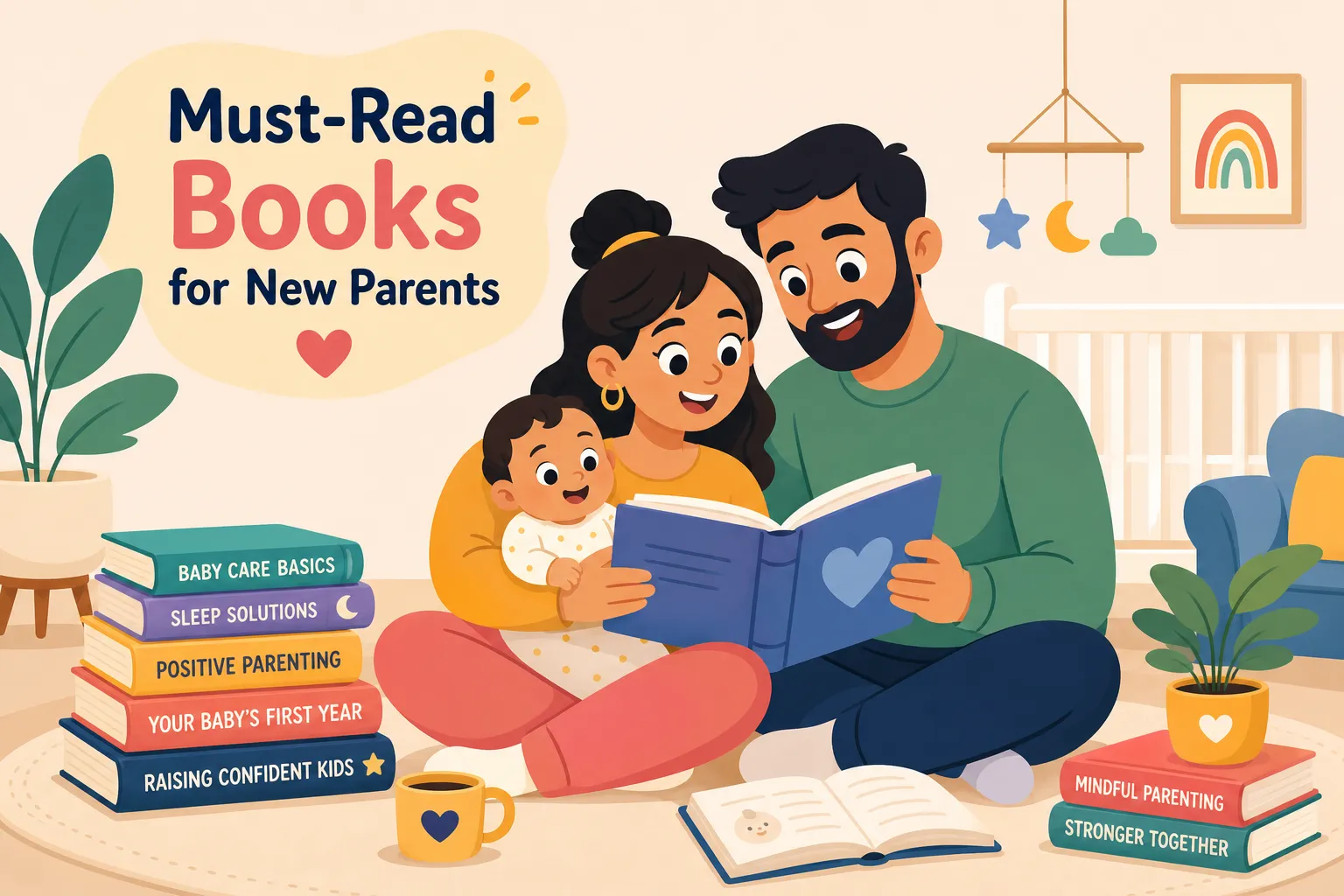
You're sitting in a hospital room, or maybe you're 32 weeks pregnant, or you've just survived night three at home with a newborn. Somewhere nearby is a stack of parenting books people recommended, and you have read approximately eleven pages. That's the reality nobody talks about: the books pile up faster than you can open them.
The problem isn't motivation. It's time, energy, and the fact that every book seems to contradict the last one. This list cuts through that noise. These must-read books for new parents are organized by what actually matters most in the first year: sleep, brain development, and emotional wellbeing for both you and your baby. All 15 titles are listed in the order a new parent actually needs them, not alphabetically or by bestseller rank.
And for the weeks when reading a full chapter feels impossible, platforms like Bloomkini exist for exactly this reality: AI-powered summaries and audio content that deliver the insight without requiring two uninterrupted hours of quiet. More on that below. For now, here's the list that actually works.
Must-Read Books for New Parents: Sleep, Brain Development, and Wellbeing
Before we get into individual titles, here's the honest truth about reading as a new parent: sequence matters more than speed. The 15 books below are grouped by the three areas that matter most in year one. Work through them in order, and each one will land at exactly the moment you need it.
Books That Tackle Newborn Sleep (Read These First)
Sleep is the first real crisis of new parenthood. Before you worry about development milestones or discipline philosophy, you need to know how to calm a screaming baby at 3am. Two of these three books focus on decisions you'll face in the first weeks; the third is the fact-checker you'll reach for when advice conflicts.
1. The Happiest Baby on the Block, Harvey Karp
Pediatrician Harvey Karp's book is one of the most frequently recommended titles for parents of newborns, and for good reason. His 5 S's (swaddle, side/stomach position, shush, swing, suck) give parents a concrete, repeatable method for triggering a baby's calming reflex. One important note: the side/stomach position in the 5 S's is used only for calming a supervised, awake baby, always place your baby on their back to sleep, per AAP safe-sleep guidelines. These techniques work best used together, not in isolation. The audiobook runs about six hours, which makes it manageable while you're rocking, feeding, or staring at the ceiling at midnight.
2. Cribsheet, Emily Oster
Emily Oster is an economist, and she reads the parenting research the way most of us wish we could. Cribsheet applies a data-first lens to early parenting decisions, including sleep training methods, breastfeeding duration, and day care choices. The tone is calm, non-judgmental, and refreshingly free of guilt. This is the book for parents who are exhausted by conflicting advice and want to see what the actual studies say.
3. The Science of Mom, Alice Callahan
Alice Callahan wrote this book as a science journalist and new parent, and it shows. She covers sleep, breastfeeding, vaccines, and development with citations, not opinion. This is the book you reach for when a well-meaning relative makes a claim that doesn't sound quite right. Once your baby hits the 4-6 month window and sleep training decisions become more pressing, Healthy Sleep Habits, Happy Child by Marc Weissbluth and The No-Cry Sleep Solution by Elizabeth Pantley belong on your next reading pass.
Books That Explain Your Baby's Developing Brain
Understanding why your baby acts the way they do transforms parenting from firefighting into connection. These three books give you the mental models to do that from birth onward, building a foundation that pays off through toddlerhood and beyond.
4. The Whole-Brain Child, Daniel J. Siegel and Tina Payne Bryson
Siegel and Bryson take actual neuroscience and make it genuinely usable for non-scientists. The Whole-Brain Child explains why children react the way they do in emotional moments and gives parents practical strategies for responding in ways that build connection rather than conflict. Their follow-up, No-Drama Discipline, applies the same framework specifically to handling difficult behavior. Both are worth reading back to back.
5. The Yes Brain, Daniel J. Siegel and Tina Payne Bryson
Where The Whole-Brain Child teaches you to understand your child's behavior, The Yes Brain focuses on building the emotional foundation: curiosity, resilience, and flexibility from early on. Think of it as the implementation guide. Read The Whole-Brain Child for the framework first, then The Yes Brain for how to put it into daily practice.
6. Your Self-Confident Baby, Magda Gerber
Magda Gerber's RIE philosophy is built on a simple idea: observe, trust, and respect your baby from the very beginning. This book is particularly relevant in the 0-6 month window, when caregiving instincts are being formed. It's a relationship-based, low-intervention approach grounded in attachment theory, and it offers a refreshing counterweight to the "optimize everything" culture that surrounds modern parenting.
Books for New-Parent Emotional Wellbeing and Connection
The most underrated part of first-time parenting is managing your own emotional state. These three books are as much for you as they are about your child, and that distinction is the whole point.
7. Good Inside, Dr. Becky Kennedy
Dr. Becky Kennedy's central argument is disarmingly simple: your child is good inside, and so are you. The book reframes difficult behavior as a signal of unmet needs or overwhelmed emotions rather than defiance, and it gives parents concrete language for specific moments, including scripts for situations that previously ended in yelling or guilt. Good Inside has become widely read and widely discussed since its release, earning consistent placement on parenting roundup lists across the country. How to Talk So Kids Will Listen and Listen So Kids Will Talk by Adele Faber and Elaine Mazlish is a complementary classic that pairs naturally with Kennedy's approach.
8. Peaceful Parent, Happy Kids, Dr. Laura Markham
Dr. Markham's core insight is that parenting starts with the parent. Before you can manage a child's emotional storms, you need tools for managing your own reactions first. This book is especially useful for high-anxiety parents or those who were parented harshly themselves and are actively working to break the cycle. Practical exercises are woven throughout, not relegated to an appendix.
9. Bringing Up Bébé, Pamela Druckerman
Of all the books on this list, Bringing Up Bébé is the easiest read, and that's intentional. Pamela Druckerman's observations of French parenting culture offer perspective, gentle humor, and a needed reminder that American parenting intensity isn't universal or necessary. If you're feeling crushed by the pressure to do everything perfectly, this book is the exhale your reading list needs.
Evidence-Based Reads for the Data-Driven First-Time Parent
Some parenting decisions carry real stakes, and that's where books grounded in research earn their place. These two titles are the reference anchors of any solid first-time-parent reading list.
10. Expecting Better, Emily Oster
Read this one before birth. Oster applies the same economic analysis from Cribsheet to pregnancy itself, helping expectant parents understand which OB/GYN rules are solidly evidence-based and which are overcautious conventions. It pairs naturally with What to Expect When You're Expecting as a broader medical reference. Together, they cover from pregnancy through the first couple of years with both depth and analytical rigor.
11. What to Expect the First Year, Heidi Murkoff
This is the reference book, not the cover-to-cover read. You won't sit with it on a Sunday afternoon. You'll pull it out at 2am because the baby has a rash you've never seen, or they've skipped a feeding, or you just need a data point to calm your nerves. Use it by stage and symptom, not sequentially. It earns its place on the nightstand by being useful in specific moments rather than as a narrative arc.
This category is also where time-poor parents most often give up halfway through. These books are dense and detailed, and the effort is real. Which brings us to the most practical question on this list.
When There's No Time to Read: A Smarter Approach for Sleep-Deprived Parents
Here's the honest tension: every book on this list is worth reading, and most new parents are working with very limited uninterrupted time each day. Full books don't get finished. Highlighted passages go unread. Good advice stays locked in chapters you never reach.
That's exactly the problem Bloomkini was built to solve. Bloomkini is an AI-powered learning platform with thousands of books and summaries across parenting, early literacy, and child development. Instead of committing to a full 300-page book, parents access focused summaries that distill the core insights from titles like the ones on this list into a format that takes minutes, not hours.
The audio feature is particularly useful for new parents. Listen while you're nursing, rocking the baby, or driving to the pediatrician. The AI Q&A feature lets you ask specific questions and get answers drawn directly from the content. So instead of hunting through chapters at midnight to find out if what you're dealing with is normal, you get the answer you need right now.
Bloomkini isn't a replacement for reading. It's the entry point that gets you the right information when the window to sit down with a full book simply doesn't exist. The bar to try it is low, and the value is immediate.
A Simple Reading Order: What to Read and When
The sequence matters more than the list size. Here's how to work through these must-read books for new parents without burning out before month two.
Before Birth: Two Books to Read While You Still Have Time
Read Expecting Better during pregnancy and Good Inside before the baby arrives. Expecting Better gives you a clear-eyed framework for navigating the medical decisions of pregnancy. Good Inside gives you the parenting philosophy to internalize before chaos sets in. Having those values in place before the newborn stage means you're drawing on them instinctively rather than scrambling to find them through a fog of sleep deprivation.
Top Must-Read Books for New Parents: Newborn Sleep (Weeks 1-8)
In the first two months, a practical choice for many parents is to focus on a single book: The Happiest Baby on the Block. Soothing a crying baby is the most urgent skill in this window. Development theory, sleep philosophy, feeding science, all of it can wait two months. Narrowing your focus to one clear goal reduces overwhelm and builds the confidence that comes from actually succeeding at something concrete.
Months 3-12: Layering In Development and Connection
By month three, most parents find they have slightly more cognitive bandwidth. This is when adding The Whole-Brain Child makes sense, followed by either Peaceful Parent, Happy Kids or Cribsheet depending on whether your priority is emotional regulation or sleep training decisions. Reading in this sequence (practical first, philosophical second) means each book builds on experience you've already had rather than preparing you for scenarios you can't yet imagine.
The Right Books at the Right Time
You don't need all 15 books to become a confident new parent. You need the right must-read books for new parents at the right stage. Sleep, brain development, and emotional wellbeing are three of the most critical areas to address in year one, and working through them in order matters more than the total count. Feeding, safety, and responsive caregiving are equally important; your pediatrician remains your best resource for those specifics alongside your reading.
Start with what's most urgent. Layer in depth as your bandwidth grows. On the days when the books sit on the nightstand untouched, Bloomkini's summaries and audio content keep the insight accessible, even when the time isn't there. The goal isn't to finish every book. The goal is to feel equipped, connected, and a little less alone in one of the most demanding seasons of your life.